Austin has more personal trainers than taco trucks—and most of them look great on Instagram. The hard part is not finding someone who can film a kettlebell flow. It is finding a coach who will change how you train, eat, and recover for the next decade. After ten-plus years coaching here at Tiger ATX, I have watched clients waste months and thousands on the wrong fit. This is what I tell friends before they sign anything.
Why Choosing the Right Austin Personal Trainer Changes Everything
Austin's fitness scene exploded over the last decade. Boutique studios, big-box chains, outdoor boot camps at Zilker, and garage gyms all compete for the same busy professionals, parents, and weekend athletes.
That abundance is a gift and a trap. You can book three consultations in a week and still leave unsure who will actually get you results.
Personal training is not a commodity. Two trainers charging the same rate can deliver completely different outcomes. One writes a thoughtful progression built around your movement limitations and schedule. The other runs you through a sweaty circuit that feels hard but never gets you stronger.
The difference shows up six months later—when one client has rebuilt their deadlift and lost fifteen pounds, and the other is nursing a sore back and considering quitting again.
If you are comparing options, start with our Austin personal trainer overview, then use this guide to narrow the field before you commit.
Who This Is For
This guide is for anyone in Austin who is about to hire a personal trainer and wants to get it right the first time.
This guide fits you if…
- ✓You are new to personal training and do not know what questions to ask
- ✓You had a bad experience with a previous trainer and want a better vetting process
- ✓You are comparing commercial gym trainers vs private facilities like Tiger ATX
- ✓Your schedule involves downtown commutes, remote work from Bee Caves or Westlake, or frequent travel
- ✓You want fat loss, strength, or post-injury coaching—not just someone to count reps
- ✓You are deciding between in-person, online training, or a hybrid model
Already narrowed your search to private coaching? Read best personal trainer Austin for evaluation criteria, then come back here for the step-by-step vetting checklist.
Credentials and Experience: What They Actually Prove
Legitimate personal trainers in Austin should hold a nationally recognized certification. NASM (National Academy of Sports Medicine), ACE, and NSCA-CPT are common and credible.
CSCS (Certified Strength and Conditioning Specialist) signals deeper exercise science training and is worth prioritizing if you are returning from injury or training for performance.
| Credential | Best for | What to verify |
|---|---|---|
| NASM-CPT | General population, corrective exercise, fat loss | Current CPR/AED, continuing education credits |
| ACE-CPT | Behavior change, beginner-friendly coaching | Specialty certs (nutrition, senior fitness) if relevant |
| NSCA-CPT / CSCS | Strength athletes, sport performance, complex programming | Experience applying science to non-athletes too |
| No certification | Not recommended | Walk away—Austin has too many qualified coaches |
Certification myths
Ask directly: How long have you coached clients with goals like mine? Can you share anonymized results or testimonials?
At MacFitt, we publish real client transformations because proof should not be a secret handshake.
Coaching Style: The Factor Most Austin Clients Skip
You will spend hours with this person every month. If their communication style clashes with yours, you will ghost sessions no matter how good their programming looks on paper.
Some clients want direct, no-nonsense feedback. Others need encouragement and education before they push intensity. Neither is wrong.
Trial session checklist
- ✓Did they ask about your injury history, sleep, stress, and schedule before touching a weight?
- ✓Did they watch you move—not just count reps?
- ✓Could they explain each exercise in plain language?
- ✓Did they adjust when something felt off, or push through?
- ✓Did you leave with a clear picture of what the next four weeks look like?
- ✓Did you feel respected, not judged?
Pay attention to how they handle uncertainty. Great Austin personal trainers say "let me see how that feels" and modify. Weak trainers double down on ego lifts or generic circuits because that is all they know.
| Factor | High-quality coach | Poor fit |
|---|---|---|
| Session structure | Warm-up, focused work, cooldown; every minute has a purpose | Random exercises piled together to induce sweat |
| Feedback | Specific cues tied to your body mechanics | Generic yelling or silence while on their phone |
| Progression | Logged weights, reps, and planned overload | Same workout every week with no tracking |
| Nutrition | Practical guidance aligned with training | Hard-sell shakes or extreme restriction |
Gym Environment: Commercial Floor vs Private Training Space
Where you train shapes what you get. A trainer spotting you on a crowded LA Fitness floor competes with wait times for benches, music volume, and members walking through your set.
That is not a knock on commercial gyms—they serve a purpose—but one-on-one coaching in that environment is a compromise.
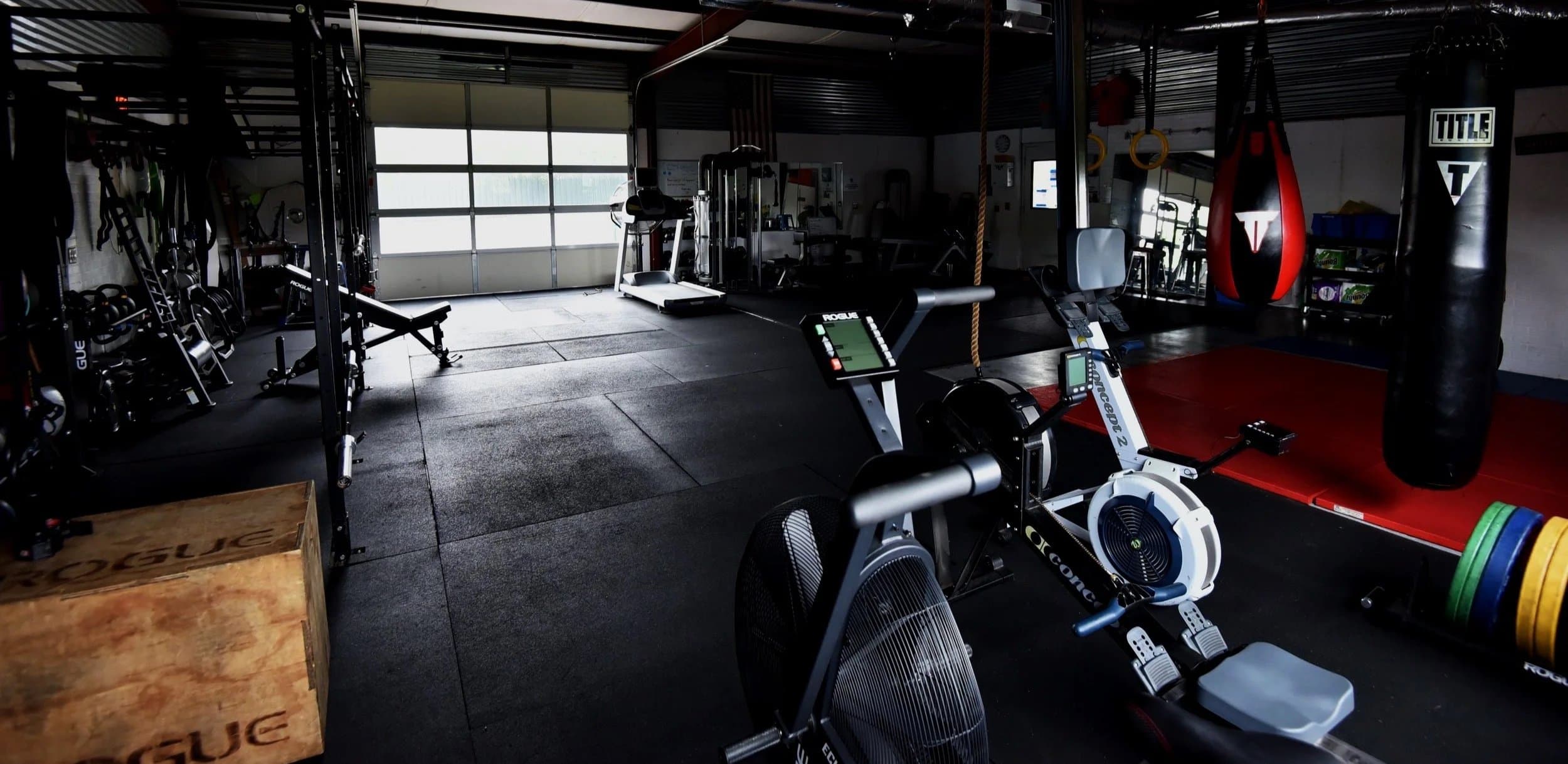
Private gym training in Austin—like our space at Tiger ATX on Old Bee Caves Road—means appointment-only access, climate-controlled space, and equipment ready when you arrive.
No hunting for dumbbells. No negotiating for a squat rack. For busy Austin professionals fighting rush hour on Bee Caves or MoPac, that efficiency is part of the value.
- Appointment-only access: your session time is yours
- Equipment availability: no waiting or improvising substitutions
- Privacy: train without an audience if that matters to you
- Parking and location: factor in Westlake, Barton Creek, and rush-hour traffic
- Cleanliness and maintenance: professional facilities reflect professional coaching
Programming, Nutrition, and How Austin Clients Actually Get Results
Sessions are the visible part of coaching. Programming is the engine. A competent Austin personal trainer builds a multi-week plan with progressive overload, deloads, and goal-specific phases—whether that is fat loss, muscle gain, or rebuilding strength after years off.
Nutrition should not be an upsell. If your goal includes weight loss, your trainer should help you set realistic calorie and protein targets, navigate Austin's restaurant scene on Rainey or South Lamar, and build habits—not hand you a 1,200-calorie meal plan that collapses on vacation.
Ask how they measure progress beyond the scale: strength numbers, circumference measurements, energy levels, sleep, consistency streaks.
Review our results page for examples of what structured coaching produces when the programming matches the person.
- Define a 90-day outcome (not just "lose weight")
- Assess movement and baseline metrics in week one
- Build a phased program with clear progression rules
- Review nutrition and recovery weekly
- Adjust every 4–6 weeks based on data and life events
Common Mistakes to Avoid
Most hiring mistakes are avoidable. Here is what I see Austin clients get wrong before they ever pick up a barbell.
- Choosing the trainer closest to your office when you will never drive there after 5 p.m. traffic
- Signing a twelve-month contract before completing a single paid trial session
- Assuming a free "consultation" shows you how someone coaches under load—it usually does not
- Ignoring red flags because the trainer is charismatic or has great abs
- Expecting the trainer to outwork a chaotic sleep schedule and zero nutrition plan
- Not asking who writes the program—or whether you get the same coach every session
Take two weeks with a coach before committing long-term. That is enough data to evaluate chemistry, communication, and whether a plan exists beyond today's sweat.
Cost, Contracts, and How Long to Commit
Austin personal training rates typically range from $85 to $200+ per session depending on experience, location, and format. Cheaper is not always worse, and expensive is not always better.
Evaluate what is bundled in: custom programming, messaging between sessions, nutrition guidance, and flexibility when you travel.
Read our full breakdown of personal training cost in Austin for rate factors and value benchmarks. Be wary of aggressive long-term contracts before you have completed at least two weeks of sessions.
Also consider online training if travel or schedule volatility makes in-person Austin sessions difficult. Hybrid models—monthly in-person form checks plus remote programming—can work well for the right client.
See personal trainer vs online coach for an honest comparison.
Red Flags and Your Next Step
Walk away if you notice…
- ✓No movement assessment or health history intake
- ✓Every client does the same workout regardless of goals
- ✓Supplement sales pitched harder than coaching
- ✓Dismissive attitude toward pain or injury concerns
- ✓No plan for progression—you just "show up and sweat"
- ✓Unwillingness to coordinate with your physical therapist or doctor
- ✓Guaranteed results timelines that sound like infomercials
Choosing a personal trainer in Austin is a decision you feel in your knees, your energy, and your confidence—not just your wallet. Take the trial session. Ask hard questions. Trust your gut when someone makes you feel seen versus sold.
If you want a coach who programs for the long game in a private, focused environment, book a consultation at MacFitt. We will talk goals, tour Tiger ATX, and decide together whether it is the right fit—no pressure, no cookie-cutter plan.
The Bottom Line
Start with our best personal trainer Austin criteria, book trials at facilities you can actually reach—including private gym options—and contact MacFitt when you are ready to compare against a coach who has been doing this in Austin for over a decade.
Frequently Asked Questions
Start with referrals from friends, your physical therapist, or coworkers who have made real progress. Search Google Maps for trainers near your neighborhood—Westlake, South Austin, Downtown—and read reviews that mention specific results, not just "great energy." Filter for NASM, ACE, or CSCS credentials. Book consultations with two or three coaches and compare trial sessions. MacFitt clients often find us through results pages or local search for private gym training on Bee Caves Road.
At minimum, a nationally recognized CPT such as NASM, ACE, or NSCA. NASM emphasizes corrective exercise and is strong for general population clients. CSCS is excellent for strength-focused programming. CPR/AED certification should be current. Specialty certs (nutrition, senior fitness) are bonuses, not substitutes for a base personal training credential.
Yes—a paid trial or assessment session is standard among serious Austin trainers. Free "consultations" that are really sales pitches do not show you how someone coaches under load. Expect to invest in one session to evaluate fit. Many coaches credit that fee toward a package if you sign up.
If focus, privacy, and time efficiency matter to you, yes. Private facilities like Tiger ATX eliminate wait times and distractions, so more of your hour goes to coaching. Commercial gym trainers can be skilled, but they are often limited by floor chaos. Read more in our private gym training guide.
Most Austin clients start with two to three sessions per week for four to eight weeks while learning form and building habits. After that, many drop to one weekly session plus independent workouts using programmed homework. Frequency depends on goals, budget, and accountability needs—not a universal rule.
A qualified personal trainer should integrate fat loss programming and practical nutrition guidance. If your primary goal is sustainable weight loss, look for coaches with experience in habit-based nutrition—not extreme diets. Our weight loss coach guide covers what to ask.
Speak up first—good coaches adjust communication and programming. If you still feel unheard after a honest conversation, switching is normal. Austin has plenty of options. Do not let sunk cost keep you in a bad fit. Two to four weeks is enough data to evaluate chemistry and progress.
In-person is best for beginners, injury history, and anyone who needs hands-on form correction. Online works for experienced lifters with travel-heavy schedules. Many clients blend both. Compare tradeoffs in personal trainer vs online coach or explore MacFitt online training.
Ask: What certification do you hold? Who writes my program and how often is it updated? How do you handle injuries or pain during sessions? Is nutrition included? What happens between sessions—check-ins, homework, accountability? Can I tour the facility and do a paid trial? Will I have the same coach every session? Our first personal training session guide explains what a quality intro should cover.
Prioritize indoor, climate-controlled facilities over coaches who default to outdoor boot camps in July heat. Ask how they adjust programming when the heat index spikes—hydration, session timing, and conditioning volume all matter. Private gyms like Tiger ATX on Old Bee Caves Road offer air-conditioned training year-round. Hybrid online training helps if you travel frequently during summer.